
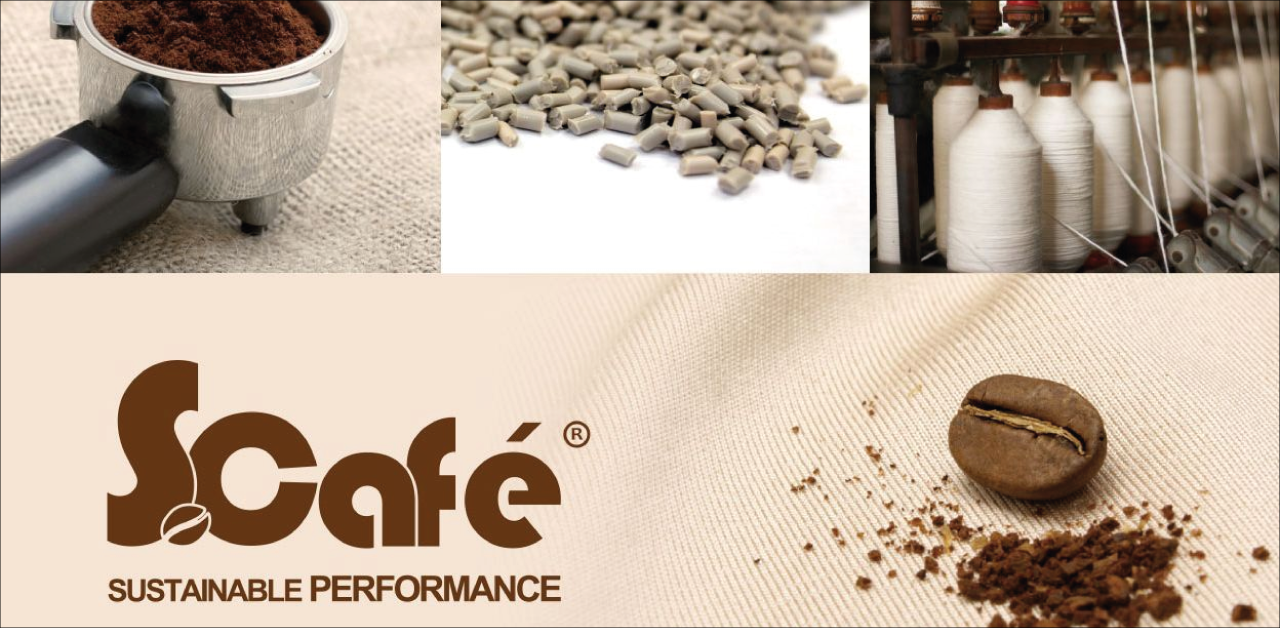
Coffee fiber clothing begins where most coffee ends: in the grounds left at the bottom of the cup. What looks like waste becomes yarn, and that yarn becomes fabric you can wear every day.
It sounds unlikely. A morning espresso and a technical t-shirt should have nothing in common. Yet the residue of one is quietly becoming the raw material of the other.
At LUNGO, this is exactly the kind of transformation we exist to show. Coffee is not a metaphor here. It is a material. And coffee fiber clothing is one of its clearest expressions.

What Is Coffee Fiber Clothing?
Coffee fiber clothing is fabric made partly from spent coffee grounds. The grounds are processed into a fine particle, combined with a polymer base, and spun into yarn that can be knitted or woven like any other textile.
The best-known example is S.Café, developed by the Taiwanese textile company Singtex. The story goes that the founder's wife suggested using coffee grounds to control odour, and a patented process followed.
The result is a functional fabric. It dries quickly, manages odour, and offers natural UV protection. It also carries a second life inside every thread, since the grounds would otherwise head to landfill.
How Coffee Fiber Clothing Is Made, Step by Step
The process behind coffee fiber clothing is precise, and it follows a clear arc from residue to material to garment.
First, spent coffee grounds are collected, often from large vendors, then cleaned and dried. Next, they are reduced to a nano-scale particle so they can bond evenly with the polymer.
That particle is then combined with recycled PET, the same material recovered from plastic bottles. Singtex reports a patented low-temperature process, carbonising at around 160°C rather than the far higher heat used for conventional treatments.
Finally, the blend is formed into a masterbatch and spun into yarn. The coffee sits on the surface of the filament, which is what gives the finished fabric its odour control and fast-drying behaviour.
The arc is always the same. Coffee residue becomes a material. The material becomes a product. Nothing is invented from scratch. Something already discarded is simply seen through a different lens.

The Same Idea, Beyond Fabric
Coffee fiber clothing is one branch of a much wider movement. The same residue is being turned into very different objects.
The Ukrainian label Ochis, for instance, hand-forms sunglasses from coffee grounds bound with flax and a vegetable-oil biopolymer. Each frame passes through a reported 39 production stages, and the material is designed to biodegrade after roughly ten years in soil.
In Berlin, Kaffeeform follows the residue-to-material-to-object arc in a different form, pressing used grounds and wood particles into durable reusable cups. It takes about six coffees' worth of grounds to make a single cup.
Together, these makers prove a simple point. Coffee grounds are not a single-use idea. They are a platform for design.
Why This Matters in Australia
Australia has the raw material in abundance. The country produces around 75,000 tonnes of spent coffee grounds and chaff each year, and most of it still goes to landfill, as the City of Melbourne has documented.
That is a national stream of material sitting unused. Coffee fiber clothing shows one path forward, turning a local by-product into something worn, kept and valued.
This is the future LUNGO is building towards. Not recycling as a slogan, but design that happens to be circular because the decisions behind it were good ones.
Coffee Fiber Clothing: Quick Questions
What is coffee fiber clothing made of?
Coffee fiber clothing is made from spent coffee grounds combined with a polymer, usually recycled PET. The grounds are dried, reduced to a fine particle, blended into a masterbatch and spun into yarn that can be knitted or woven into fabric.
Is coffee fiber clothing sustainable?
It reuses a by-product that would otherwise go to landfill and often blends it with recycled plastic, which lowers waste. It is a meaningful improvement, though true sustainability depends on transparency around inputs and what happens to the garment at end of life.
What is S.Café fabric?
S.Café is a patented coffee-based fabric developed by the Taiwanese company Singtex. It combines spent coffee grounds with recycled PET to create a yarn that dries quickly, controls odour and offers natural UV protection.
Does coffee fiber clothing smell like coffee?
No. The coffee grounds are processed and bound into the yarn, so the fabric does not smell of coffee. Instead, the grounds give the material practical properties such as odour control and faster drying.